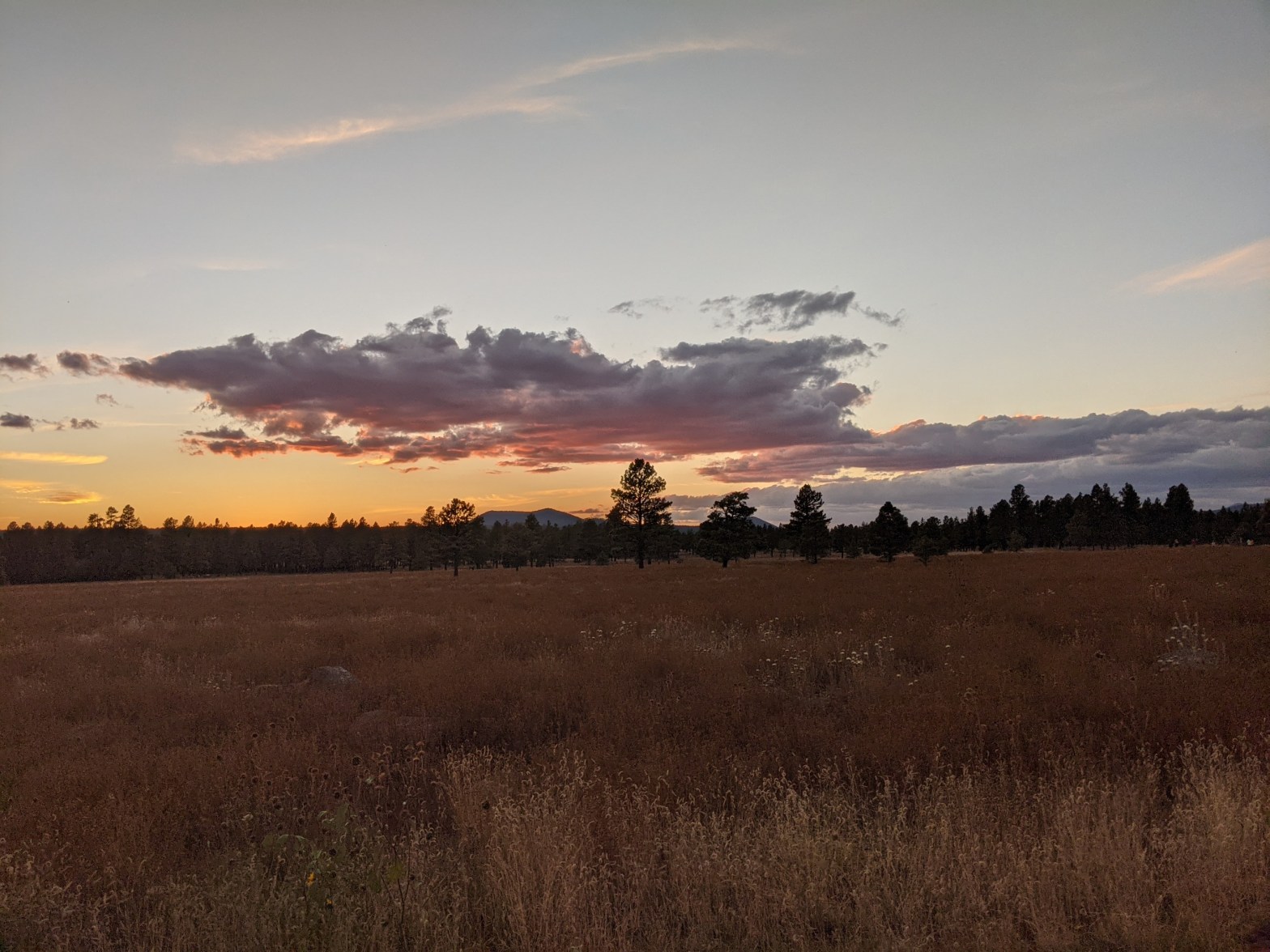
We were in Arizona and there are so many mountains and I couldn’t wait for the first beautiful sunset. We arrived at a park near Flagstaff about 10 minutes before sunset. Plenty of time right? Wrong. With the trees on the left and mountains on the right, you could see the sun setting and reflecting on the mountains to the right. And crazy me. I was running to try to get beyond the trees to actually observe the sun on the horizon but it kept moving. BTW, I learned the word alpenglow, which means a rosy glow from the sun on the mountains. It was beautiful and we caught the sunset to our left. Then we meandered back to the beginning of the park and my brother-in-law thinks it’s funny to pretend to put his head in the rear of a buffalo. (Actually we were all laughing hysterically). While we were discussing our unintelligent hyjinks, this intelligent-looking man approached and asked if we were here for the naked eye astronomy lecture. We looked at each other stupidly. Then he said he wasn’t going to take attendance (wink wink). We followed behind and eventually realized we are now part of the Northern Arizona University lecture. Lucky for us. I later researched and found out he was in charge of the astronomy facilities at the university. Anyway, we were able to see, with his guidance, Venus, Jupiter, Saturn, the big and little dippers, Orion, and the Milky Way, blocked partially by the clouds. The stars were brighter than any I have ever seen. And we learned about Dark Sky cities.
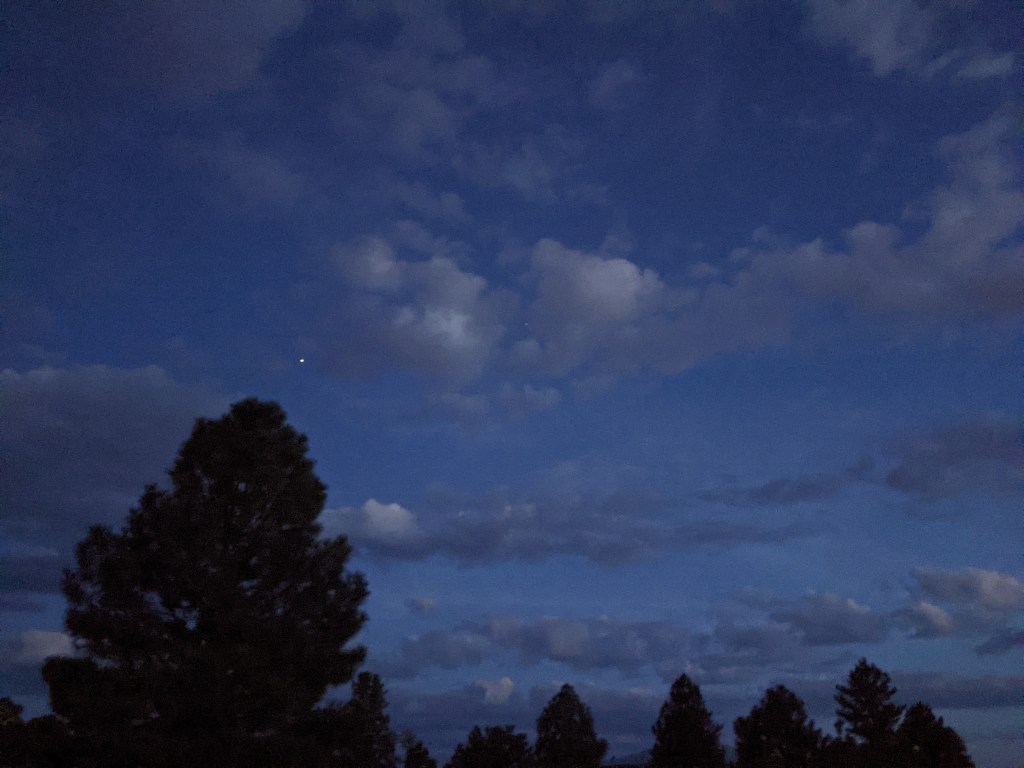
Did you know there are dark sky communities that restrict the amount and types of light that are permitted within the city’s boundary? Controlling that light diminished the light dome so you are better able to see the stars and the constellations in our galaxy. But I also learned that light pollution can affect the ecosystem too.
Nocturnal animals sleep during the day and are active at night. Light pollution radically alters their nighttime environment by turning night into day.
Glare from artificial lights can also impact wetland habitats that are home to amphibians such as frogs and toads, whose nighttime croaking is part of the breeding ritual. Artificial lights disrupt this nocturnal activity, interfering with reproduction and reducing populations. Sea turtles live in the ocean but hatch at night on the beach. Hatchlings find the sea by detecting the bright horizon over the ocean. Artificial lights draw them away from the ocean. In Florida alone, millions of hatchlings die this way every year.
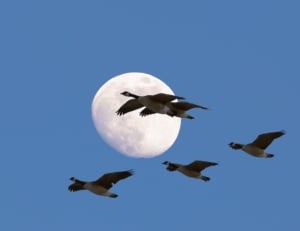
Birds that migrate or hunt at night navigate by moonlight and starlight. Artificial light can cause them to wander off course and toward the dangerous nighttime landscapes of cities. Every year millions of birds die colliding with needlessly illuminated buildings and towers. Migratory birds depend on cues from properly timed seasonal schedules. Artificial lights can cause them to migrate too early or too late and miss ideal climate conditions for nesting, foraging and other behaviors.
Many insects are drawn to light, but artificial lights can create a fatal attraction. Declining insect populations negatively impact all species that rely on insects for food or pollination. Some predators exploit this attraction to their advantage, affecting food webs in unanticipated ways.
We can’t do everything but we can do something. Amber lights are best and blue lights are the worst so you can change your lighting and make sure it points down whenever possible. It not only helps the birds, but will make your neighbors happy too. And you can save energy as well.
Random fact: Our guide used a laser pointer to clearly show the planets and constellations and reminded us to never point at a plane. The light can disperse through the entire cockpit. who knew?
 Shine Bright Where You Are